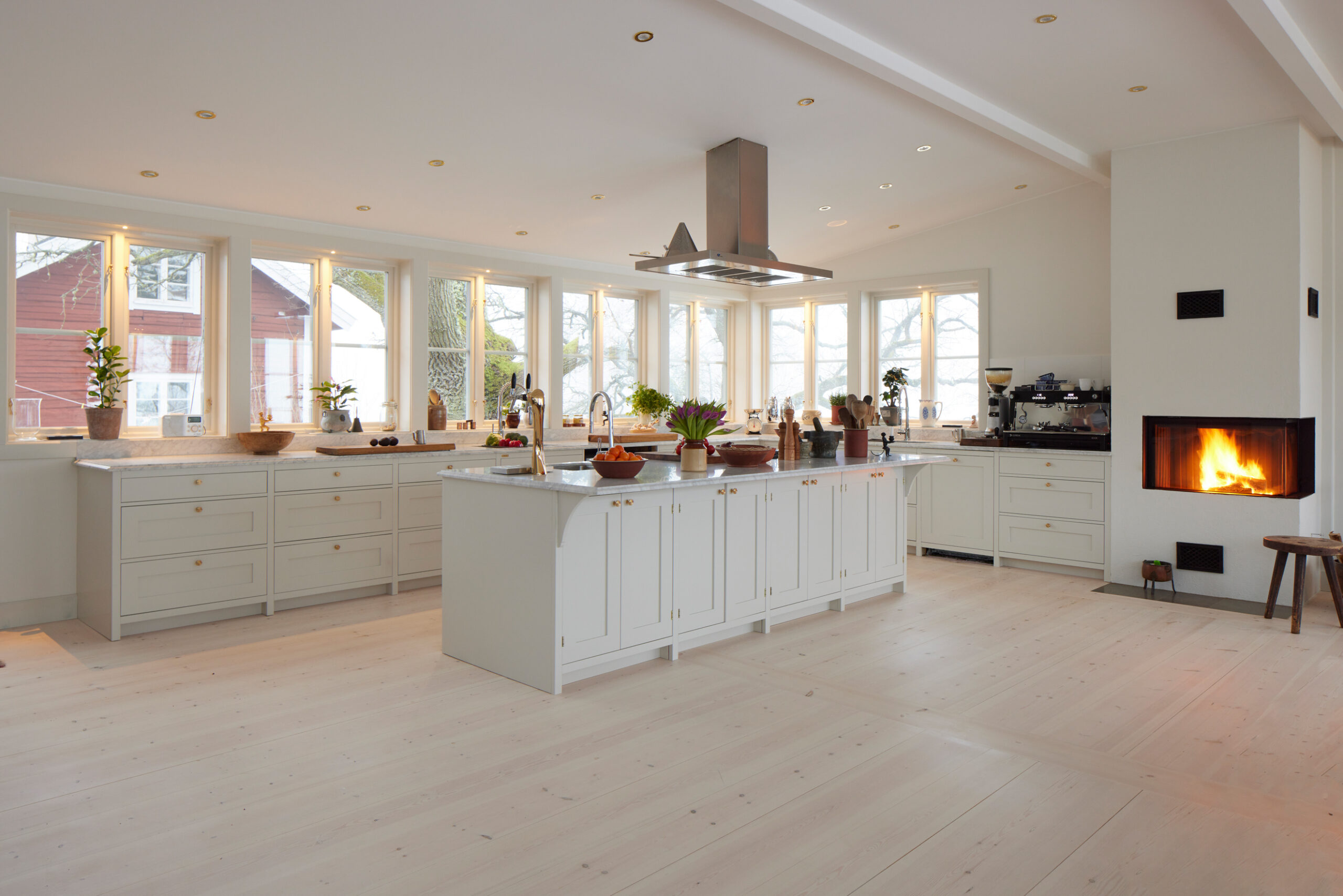
Choosing a new kitchen is a major decision, and one of the choices many people face is whether the kitchen should be built-in and custom made or based on ready-made modules. A built-in kitchen is often associated with craftsmanship, quality and long lifespan — but is it really the right choice for everyone?
In this guide, we go through the advantages and disadvantages of built-in kitchens, what distinguishes them from modular solutions and what may be important to consider before making your decision.
A built-in kitchen is designed and constructed specifically for your home, rather than assembled from standard modules with fixed dimensions. Cabinets, drawers and solutions are produced according to the room’s conditions and can be adjusted in width, height and depth. This often means better use of space, the possibility to customize details and materials, and a higher level of craftsmanship compared to mass-produced kitchens. Built-in does not always mean everything is constructed on site — many kitchens are produced in a workshop but precisely tailored to the specific home.
One of the greatest advantages is that the kitchen can be adapted to the room, including angled walls, ceiling height, older houses with uneven measurements and unusual layouts. This allows every centimeter to be utilized, which is especially valuable in smaller kitchens or older homes.
Built-in kitchens are often constructed with sturdier cabinet frames, more durable materials and solutions that can be repaired and maintained. This means the kitchen not only lasts longer but also ages more gracefully over time.
Unlike standard kitchens, there is greater freedom to choose materials such as solid pine, surface treatments, details and custom storage solutions. This makes it easier to create a kitchen that suits both the home and how you actually use it.
Built-in kitchens often focus less on short-lived trends and more on proportions, material quality and function. The result is usually a kitchen that feels relevant even after many years, without the need for major updates.
In a built-in kitchen, it is often possible to sand surfaces, adjust or repair parts instead of replacing entire sections. This is both more sustainable and often more cost-effective in the long term.
At the same time, there are disadvantages to consider. A built-in kitchen generally costs more than a modular kitchen. The price depends on material choices, the level of craftsmanship and how much customization is required. For many, it is a larger initial investment, even if the lifespan is often longer.
Unlike stock kitchens, built-in kitchens require planning, design work and production time. This means the process can take longer from the initial decision to a finished kitchen.
With greater freedom also comes more decisions, including surface treatments, details and solutions. For some, this can feel overwhelming, especially if they want something quick and simple.
Ultimately, the choice depends on needs, priorities and long-term perspective. A built-in kitchen may be the right option if you want maximum customization, value materials and craftsmanship highly, see the kitchen as a long-term investment or live in a home with unique conditions. A modular kitchen may be more suitable if you have a tighter budget, want fast delivery, live in a home with standard dimensions or plan to replace the kitchen again within a relatively short period.
A built-in kitchen often means higher quality, better adaptation and longer lifespan. At the same time, it requires a larger investment, more planning and more decisions along the way. For those who want a kitchen designed specifically for their home and built to last over time, a built-in kitchen can be a very well-considered choice.